cf #105: product-led content returns
(...not that it ever really left)

You are reading contentfolks—a monthly(ish) blend of sticky notes, big marketing ideas, and small practical examples. Thank you for being here! ~fio
Hey there 👋
If there was one thing you knew me for back in 2019, it was likely product-led content. That’s the name I’d given to our approach to content at Hotjar, which challenged a few common assumptions about what B2B content could and should do.
Back then, the majority of B2B content barely acknowledged that the company behind a piece also had a product or service to offer. Cut the logo and you wouldn’t know where you were: most articles looked like interchangeable walls of text, the vast majority felt like they had been written by a robot (ha!, the irony), and the ever-so-rare product mention was relegated to the conclusion or hidden within a CTA block.
It was as if content teams, maybe for fear of coming across as too sales-y, just thought it was safer to never mention the product at all.
…naturally, we chose to do the opposite 😉
How product-led content worked
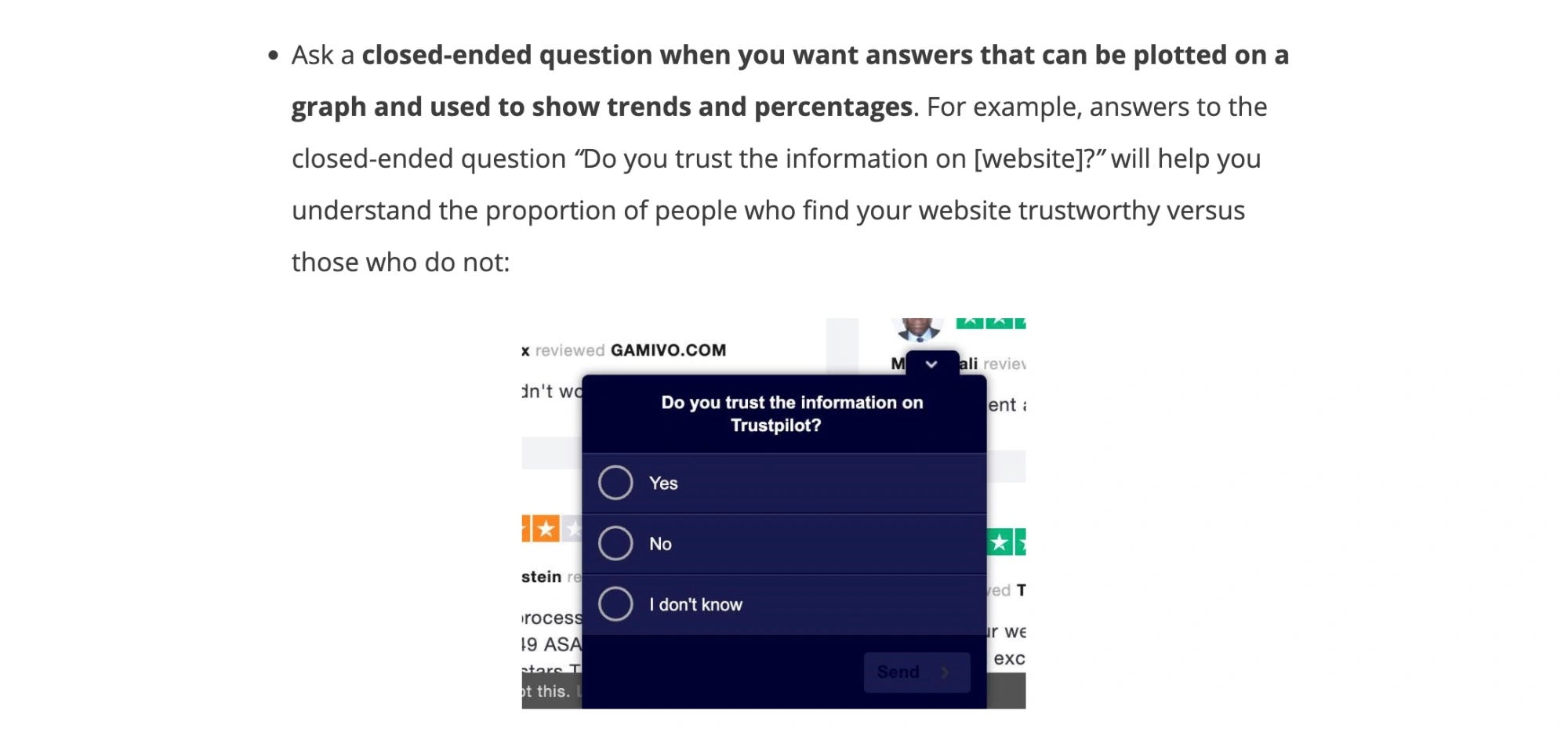
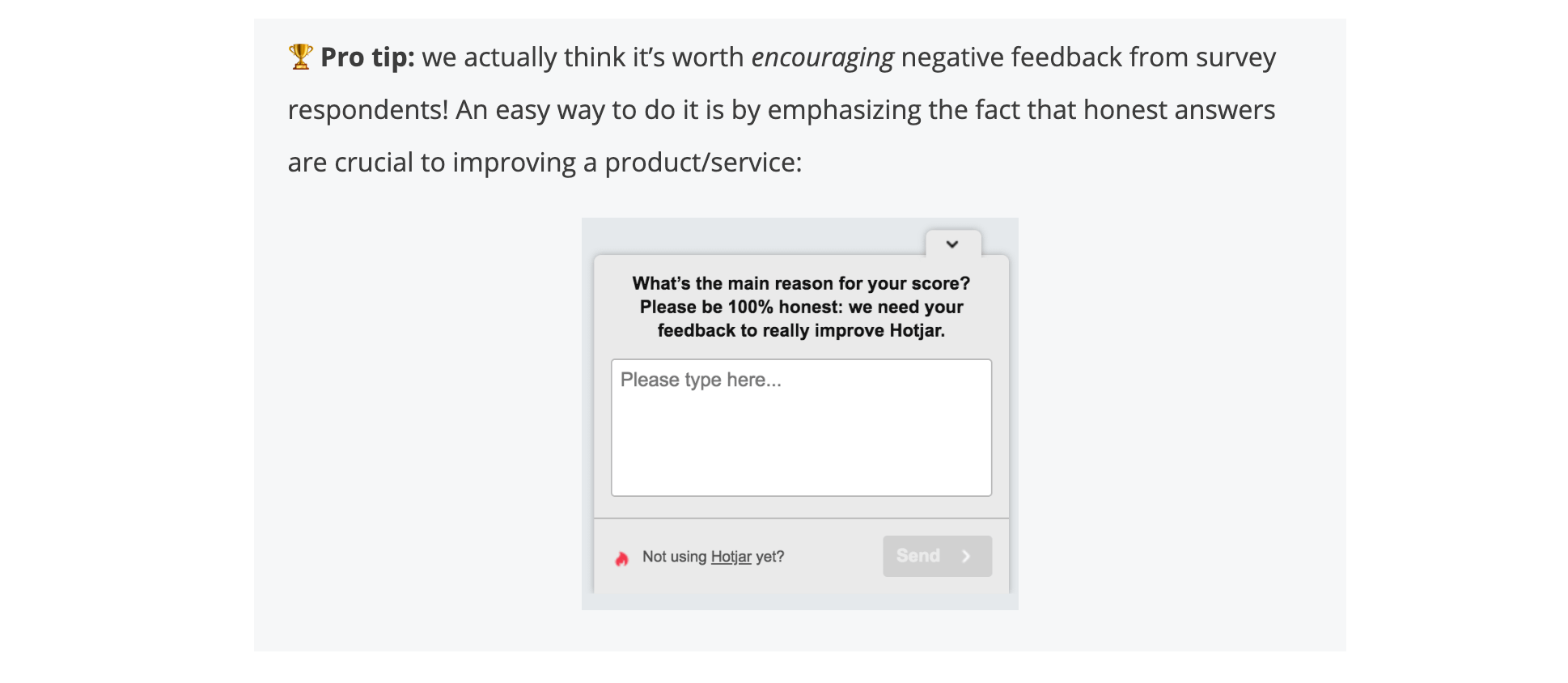
We put our brand and product at the centre of every piece. We knew Hotjar solved several problems extremely well, and instead of shying away from this fact, we doubled down on it. My editorial rule was simple: if we couldn’t naturally incorporate at least one bit of functionality and an annotated product screenshot, the piece wouldn’t happen.
You can still see an example in this guide to open-ended questions, which covered the topic thoroughly both in writing and visually, using annotated screenshots and examples of the product in use on real websites—which, wink wink, built an additional layer of social proof.
We were also opinionated about the bad, good, and great ways to use the tool—and made sure to share them.
Conventional marketing wisdom says that every content piece should focus on a single goal and audience; but we believed our approach could accomplish two things at once:
For acquisition, it exposed prospects to the product early in their discovery journey. Seeing the tool in action repeatedly would anchor it as a default solution in people’s minds, making conversion easier once they were actively evaluating options.
For retention, the same content surfaced features and use cases that existing customers might not know about or actively use. Our bet was that distributing it through newsletters and in-app notifications would help deepen adoption and make the product stickier.
Over the years that followed, product-led content proved highly successful, with measurable retention benefits and content-driven signups hitting 1k/month. And despite how much I talked about it at the time, in retrospect I don’t know that we were actively trying to pioneer a ‘new’ approach—we just believed this specific one made the most business sense out of all the available options.
Things are different now.
Or are they?
Flash forward to 2026, and several things have changed. Anybody can generate competent educational pieces with an LLM, AI overviews and zero-click marketing deliver answers without a website visit, and B2B buyers are shifting towards summaries, video clips, and synthesised answers over traditional long-form guides.
And yet, the core idea behind product-led content feels even more relevant today than it did back then.
If your content is going to be summarised without context, detached from its source, and experienced without a click, one of the few remaining advantages you have is creating stuff that only you and your company can plausibly make, with the signature details of your product features, data, customers, and point of view.
Today, ChatGPT can spin off hundreds of variations on an introduction to open-ended questions. What it still struggles to do convincingly1 is what we were doing back then: structure the narrative around a product, bring in practical examples and annotated screenshots, layer in advice from real teams actually using a feature, and weave in your opinionated take on all of the above.
Those things are the hardest to commoditise—which is why they matter the most right now.2
Product-led content was, and remains, hard to do. You can’t fully outsource it; you have to get your hands in the product, partner with Sales and Success, talk to customers, take the right screenshots, build the occasional interactive walkthrough, and develop real opinions you are willing to defend in market.
…and to tell you the truth, I find it quite satisfying that the ‘hard’ approach may be the one that ultimately wins, now that so much content has become ‘easier’ to produce 😈

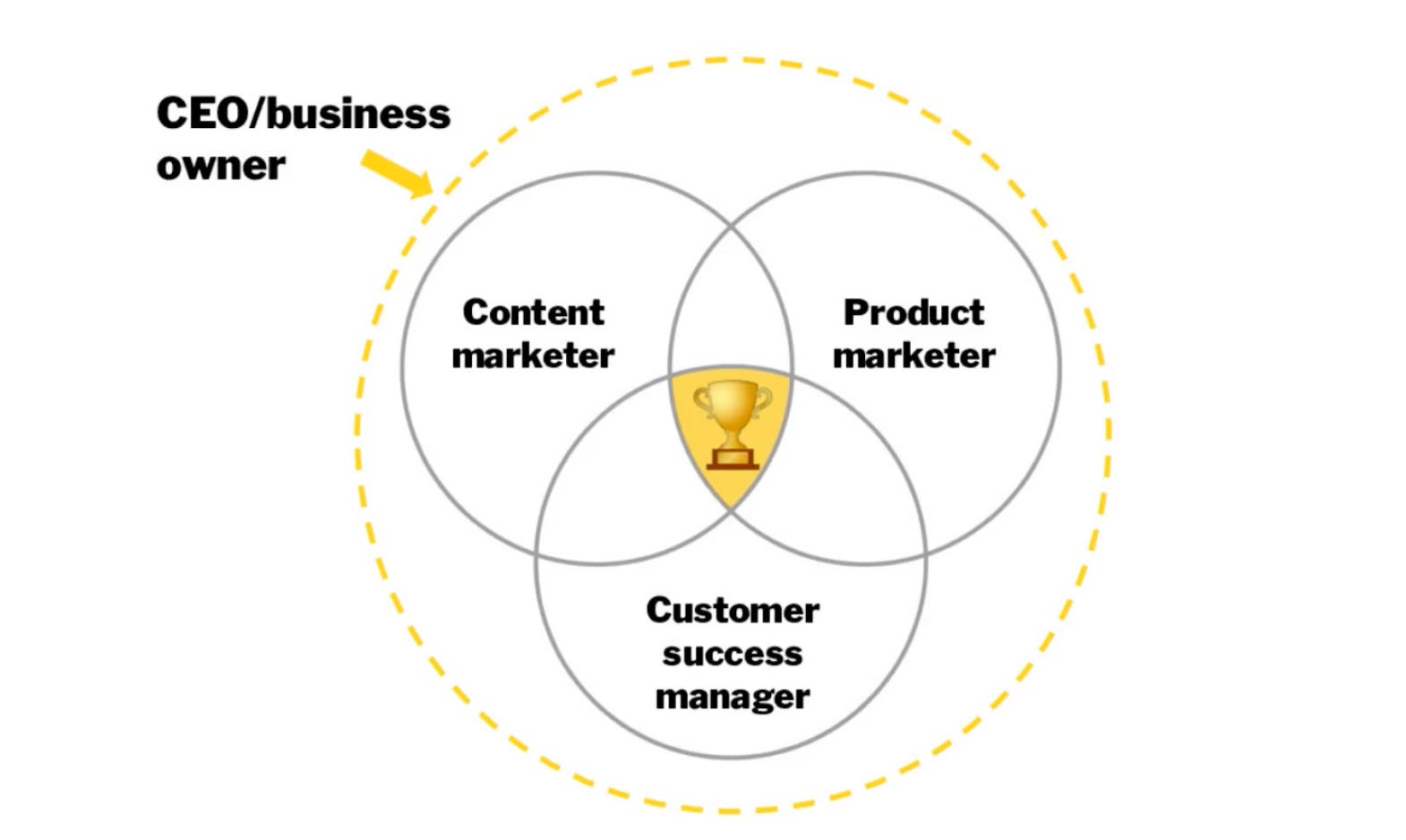
…unless thoroughly prompted and heavily edited, which requires time, context, and a modicum of product knowledge. To be fair, this feels more achievable now than it was half a decade ago, when I first came up with the diagram below. My argument at the time was that product-led content was hard because it required content marketers to think across product marketing, customer success, and business ownership simultaneously—it was a huge lift, and not something many folks could do. With AI tools and shared context, this is probably no longer as true.
For example, look at Google’s recent guidelines for optimising for AI search: the emphasis is exactly where it should be, on non-commodity content that’s helpful, reliable, and people-first. I’ll try not to say I told you so too loudly, but, like, I definitely did.